

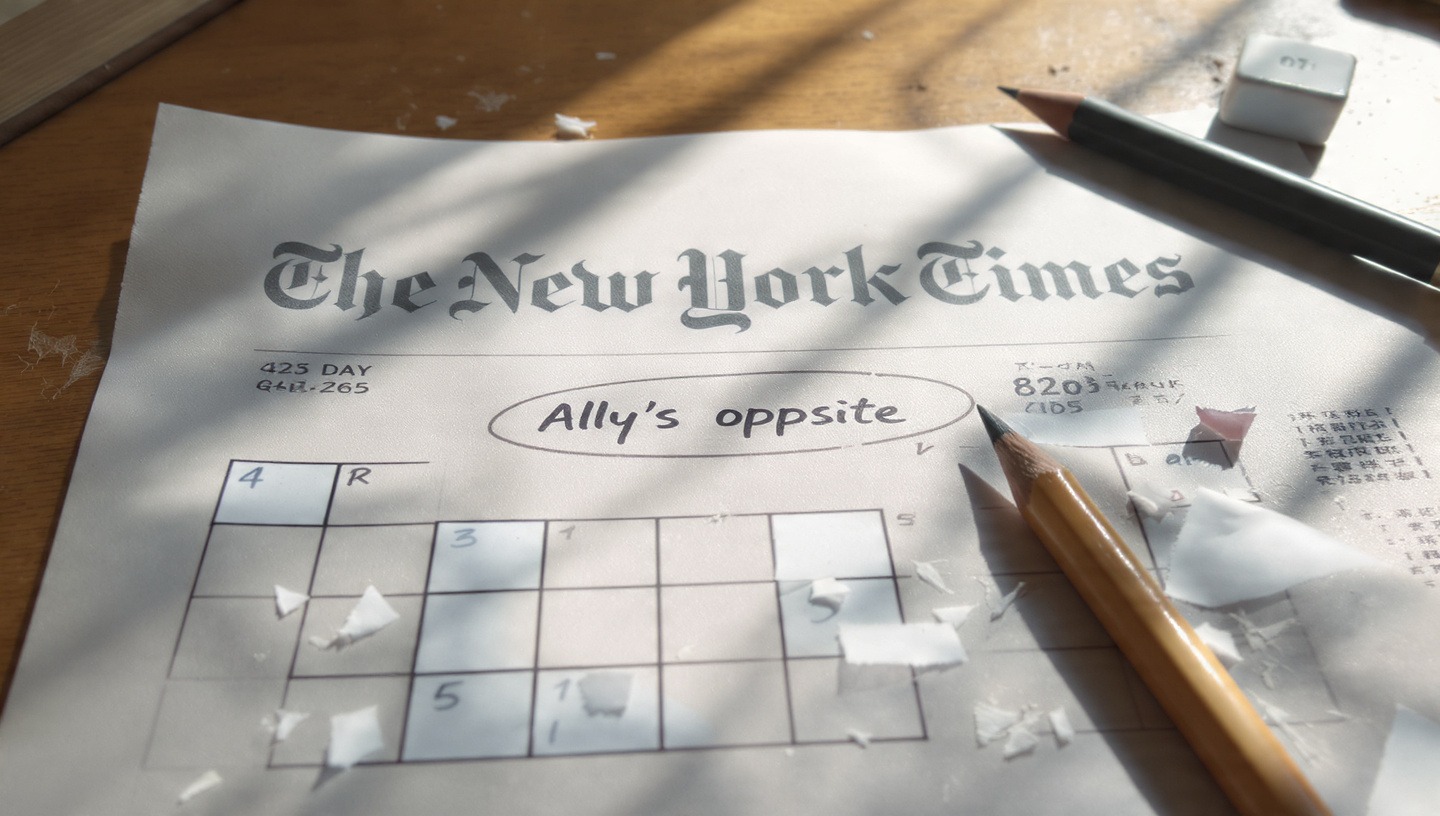
You’re halfway through the grid. Coffee’s gone cold. Confidence is shaky but alive.
Then you see it:
Ally’s opposite.
Simple, right?
And yet… you hesitate.
If you’ve searched ally’s opposite NYT, you’re not alone. This clue pops up often in the crossword from The New York Times, and it feels almost too obvious which is exactly why it can mess with your head.
Let’s break it down the way a real solver would. No robotic definitions. Just straight talk.
The Obvious Answer (That’s Usually Right)
Most of the time, the answer is:
ENEMY
Five letters. Clean. Direct. Logical.
An ally supports you. An enemy opposes you.
Case closed?
Not always.
Because crossword puzzles especially the ones in the The New York Times love to test whether you’re thinking too narrowly.
And sometimes, “enemy” isn’t what fits the grid.
Why This Clue Isn’t Always So Simple
Here’s where things get interesting.
Crossword clues often depend on:
- Letter count
- Theme of the day
- Wordplay tricks
- Tense or plural forms
If the grid calls for six letters, ENEMY won’t work. Suddenly, you’re rethinking everything.
Possible alternatives might include:
- FOE
- RIVAL
- OPPONENT
- ADVERSARY
Each one carries slightly different emotional weight.
A rival isn’t always hostile. An opponent might just be on the other team. An adversary sounds more dramatic almost cinematic.
See how nuance creeps in?
The Subtle Differences Between These Words
Let’s slow down and look at them the way constructors do.
Enemy
Personal. Strong. Emotional.
Think of historic conflicts, like during World War II. Nations weren’t just opponents. They were enemies.
There’s tension baked into the word.
Foe
Short. Old-school. Crossword gold.
Constructors love FOE because it’s compact and flexible.
Rival
Competitive, not necessarily hostile.
Two brands competing for market share? Rivals.
Two siblings fighting for attention? Rivals.
Not quite enemies.
Opponent
Neutral. Technical.
In sports coverage say in the National Football League teams face opponents every week. No personal vendetta required.
This is why context matters so much in crossword solving.
Why NYT Clues Feel Trickier Than They Should
The brilliance of the The New York Times Crossword is that it plays with expectations.
You see “ally’s opposite,” and your brain immediately says ENEMY.
But what if:
- The puzzle theme involves word reversals?
- The clue is plural?
- It’s referencing a specific cultural context?
- It’s a pun?
That tiny apostrophe in “ally’s” can even shift meaning depending on interpretation.
Is it possessive? Is it contraction? (Usually possessive here, but still.)
That’s why experienced solvers don’t rush. They pencil lightly. They wait for crosses.
A Quick Story From a Saturday Puzzle
I remember a brutal Saturday grid one of those brain-melters.
“Ally’s opposite” showed up. I confidently filled in ENEMY.
Everything around it broke.
Turns out, the puzzle theme revolved around shortened words. The answer was FOE.
Three letters. That’s it.
I erased five letters and felt personally attacked by a crossword grid.
That’s the game.
The Psychology Behind Why We Love These Clues
There’s something satisfying about binary opposites.
Ally vs enemy.
Good vs bad.
Win vs lose.
Our brains love clean contrasts.
Psychologists often talk about cognitive simplicity the mind’s preference for clear categories. But life rarely works that way. And crossword puzzles reflect that complexity in miniature form.
That’s part of their magic.
According to research shared by Harvard Health Publishing, engaging in word puzzles strengthens mental flexibility especially when clues force you to reconsider assumptions.
And “ally’s opposite” does exactly that.
Crossword Culture Has Evolved
Years ago, solving meant sitting alone with a newspaper.
Now? It’s different.
People share hints on forums. They compare solving times. They track streaks through the official NYT Crossword app.
It’s competitive but collaborative.
And clues like ally’s opposite NYT trend in search because people hit the same mental wall at the same time.
There’s comfort in that.
Fresh Insight: Why Short Answers Dominate
Here’s a bit of interesting data.
Across major daily crossword grids, three- to five-letter words appear disproportionately more often than longer entries. Constructors rely on compact words like FOE, ENEMY, and RIVAL because they help interlock longer themed answers.
So when you see a short blank, odds are good the answer will be equally compact.
That’s not random. It’s structural necessity.
Understanding that changes how you approach the puzzle.
Real-Life “Allies” and “Opposites”
Step outside the grid for a second.
In real life, opposites aren’t always enemies.
A business competitor might push you to improve.
A debate opponent might sharpen your thinking.
A rival athlete might elevate your performance.
The word ENEMY feels dramatic. But most real-world “opposites” are more nuanced.
And that’s probably why crossword constructors rotate between FOE, RIVAL, and ADVERSARY instead of defaulting to ENEMY every time.
Language reflects complexity.
How to Solve This Clue Faster Next Time
A few practical tips:
- Count the boxes first.
- Check crossing letters before committing.
- Watch for plural forms (ENEMIES changes everything).
- Pay attention to theme days (Thursday is usually trick-heavy).
- Don’t overthink but also don’t underthink.
Crossword solving is balance.
FAQs About “Ally’s Opposite NYT”
What is the most common answer to ally’s opposite in NYT?
ENEMY is the most common answer, but FOE appears frequently due to its short length.
Why does FOE show up so often?
It’s three letters, flexible, and constructor-friendly.
Can the answer ever be something unexpected?
Yes. Depending on puzzle themes, alternatives like RIVAL or ADVERSARY may fit better.
Is it cheating to Google crossword clues?
Some purists say yes. Most people say no. It depends on how you define fun.
Why are short words so common in crosswords?
They help connect longer theme answers and make grid construction possible.
A Final Thought
Next time you see ally’s opposite staring at you from the page, don’t rush.
Look at the boxes.
Check the crosses.
Breathe a little.
It might be ENEMY.
It might be FOE.
Either way, the clue isn’t just about opposition. It’s about perspective.
And sometimes, that tiny shift in thinking is what makes crossword solving so addictive.
