

Introduction
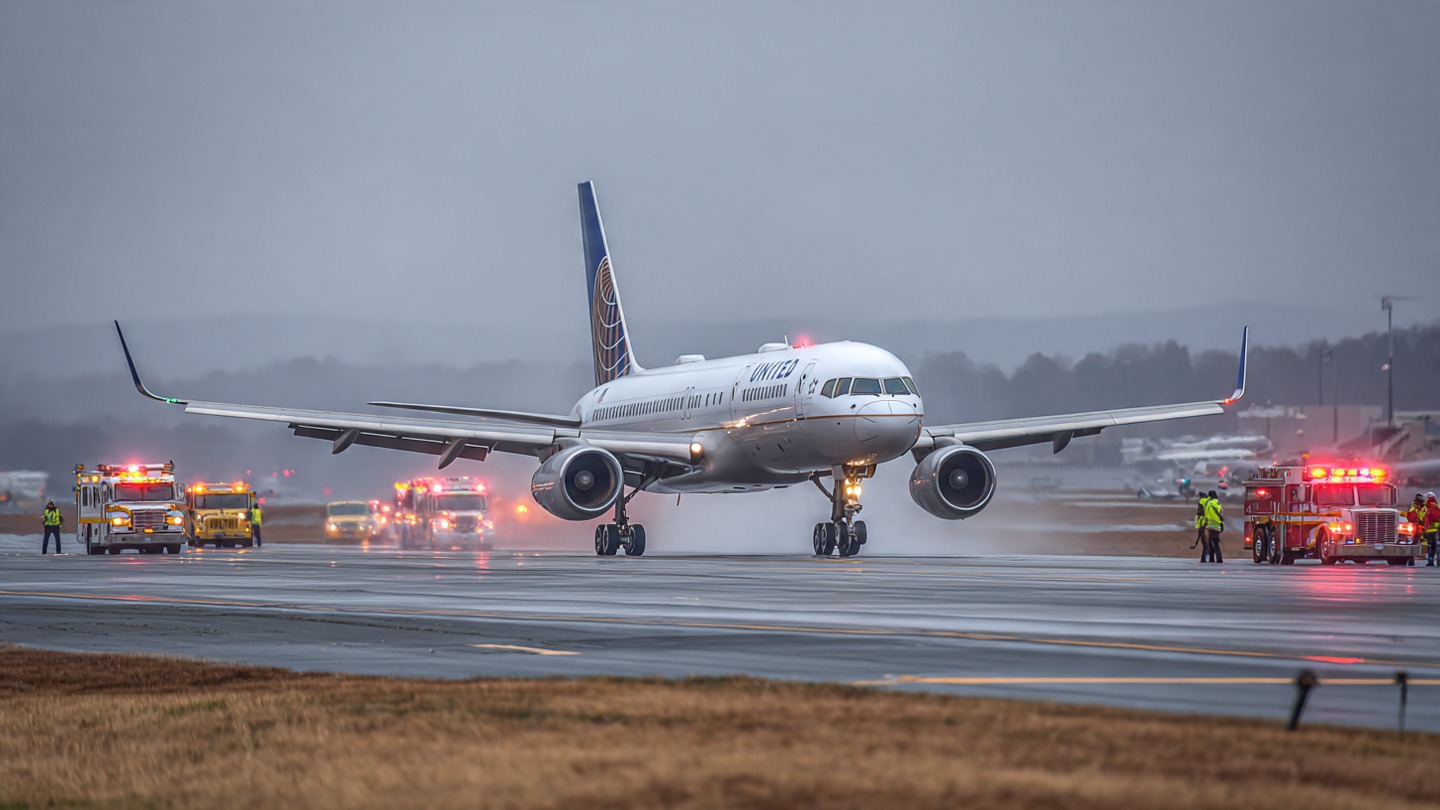
When a United Airlines flight makes emergency landing at Dulles Airport., it immediately draws attention from passengers, aviation professionals, and the media alike. Air travel is widely regarded as one of the safest modes of transportation, yet emergency landings while rare are critical reminders of the rigorous safety systems in place.
In this in-depth report, we’ll explore what happens when a United Airlines flight makes an emergency landing at Washington Dulles International Airport, the possible causes behind such diversions, how airline crews respond, and what passengers can expect in these situations. We’ll also examine aviation safety statistics, regulatory protocols, and real-world examples to give you a comprehensive understanding of the event.
Whether you’re a frequent flyer, aviation enthusiast, or concerned traveler, this guide will help clarify the facts.
United Airlines Flight Makes Emergency Landing at Dulles Airport: What Happened?
When reports confirm that a United Airlines flight makes emergency landing at Dulles Airport, the first question people ask is: why?
Emergency landings can occur for a variety of reasons, including:
- Mechanical issues
- Medical emergencies onboard
- Cabin pressure irregularities
- Engine performance concerns
- Smoke or unusual odors in the cabin
- Weather-related complications
- Bird strikes
In many cases, the decision to divert to Washington Dulles International Airport is strategic. Dulles is a major hub with:
- Long runways capable of handling large aircraft
- Advanced emergency response services
- Maintenance facilities
- United Airlines operational support
As a primary hub for United Airlines, Dulles provides immediate logistical advantages when technical or medical concerns arise mid-flight.
Why Do Emergency Landings Happen?
1. Mechanical or Technical Issues
Modern aircraft are equipped with redundant systems. However, even minor anomalies such as sensor warnings or hydraulic system alerts can prompt pilots to divert as a precaution.
For example:
- Engine vibration alerts
- Electrical system malfunctions
- Landing gear indicator inconsistencies
Pilots follow strict protocols outlined by the Federal Aviation Administration (FAA). You can review official aviation safety guidelines through the FAA’s Aviation Safety page, which outlines regulatory oversight and compliance standards.
2. Medical Emergencies Onboard
A passenger experiencing:
- Cardiac arrest
- Severe allergic reaction
- Respiratory distress
…may require immediate medical attention. In such cases, the captain coordinates with air traffic control to divert to the nearest suitable airport often Dulles due to its facilities and accessibility.
3. Cabin Pressure Concerns
Loss of cabin pressure is serious but extremely rare. Aircraft are equipped with oxygen masks and automated alerts. Pilots descend rapidly to a safer altitude and may divert to a major airport like Dulles for inspection.
4. Weather or External Hazards
While rare, sudden weather changes or bird strikes can necessitate an emergency landing.
According to the FAA, commercial aviation in the United States maintains an exceptionally high safety record, with millions of safe departures annually.
United Airlines Flight Makes Emergency Landing at Dulles Airport: Step-by-Step Response
When a United Airlines flight makes emergency landing at Dulles Airport, a structured process unfolds.
Step 1: Pilot Assessment
Pilots evaluate cockpit indicators and communicate with air traffic control (ATC).
Step 2: Declaration of Emergency (If Required)
The captain may declare:
- “Pan-Pan” (urgent situation)
- “Mayday” (serious emergency)
This prioritizes the aircraft for landing clearance.
Step 3: Cabin Crew Preparation
Flight attendants:
- Brief passengers
- Secure cabin equipment
- Prepare for possible evacuation
- Demonstrate brace positions if necessary
Step 4: Ground Emergency Coordination
At Dulles, airport fire and rescue teams stand by. Emergency vehicles are positioned near the runway.
Step 5: Safe Landing and Inspection
After landing:
- Aircraft taxis to designated area
- Engineers inspect the plane
- Passengers may deplane normally or via stairs
The Role of Washington Dulles International Airport
Washington Dulles International Airport is strategically important for United Airlines. It offers:
- 11,500+ foot runways
- Advanced Instrument Landing Systems (ILS)
- Dedicated airline maintenance hubs
- 24/7 emergency services
Because Dulles is a United hub, replacement aircraft, crew support, and passenger rebooking can happen faster compared to smaller airports.
Passenger Experience During an Emergency Landing
If you are onboard when a United Airlines flight makes emergency landing at Dulles Airport, here’s what you can expect:
Communication
Pilots typically inform passengers calmly. Transparency reduces panic.
Controlled Environment
Cabin crew maintain professionalism and reassurance.
Post-Landing Process
- Medical teams board (if needed)
- Aircraft is evaluated
- Passengers are rebooked or accommodated
In most cases, emergency landings are precautionary not catastrophic.
Aviation Safety Statistics: Putting It Into Perspective
Air travel remains one of the safest transportation methods globally.
According to international aviation data:
- Millions of commercial flights operate annually.
- Emergency landings represent a tiny fraction.
- Fatal accident rates have significantly declined over decades.
The International Air Transport Association (IATA) reports continued safety improvements year over year.
This context is important: when a United Airlines flight makes emergency landing at Dulles Airport, it often reflects precautionary safety culture not failure.
Common Myths About Emergency Landings
Myth 1: Emergency Landing Means Crash Risk
Reality: Most are precautionary.
Myth 2: Aircraft Are Unsafe
Reality: Commercial aircraft undergo constant maintenance and inspections.
Myth 3: Passengers Are in Immediate Danger
Reality: Pilots divert early to avoid escalation.
Case Studies of Similar Incidents
Historically, emergency landings at major hubs like Dulles have involved:
- Engine warning lights that turned out to be faulty sensors
- Medical diversions for elderly passengers
- Bird strikes with no structural damage
In most documented cases, passengers were safely accommodated within hours.
What Happens to the Aircraft After Landing?
After a United Airlines flight makes emergency landing at Dulles Airport:
- Maintenance crews conduct diagnostics.
- Flight data recorders may be reviewed.
- Engineers assess mechanical systems.
- Clearance is granted before next departure.
If needed, passengers are transferred to a replacement aircraft.
Passenger Rights and Compensation
In the U.S., compensation depends on:
- Cause of diversion
- Length of delay
- Airline policies
While mechanical issues may not always require financial compensation, airlines typically provide:
- Meal vouchers
- Hotel accommodations (if overnight)
- Rebooking without charge
How Airlines Train for Emergencies
Pilots and cabin crew undergo:
- Simulator training every 6–12 months
- Emergency evacuation drills
- Crisis communication training
- FAA-mandated recurrent certification
This ensures preparedness when a United Airlines flight makes emergency landing at Dulles Airport.
FAQs: United Airlines Flight Makes Emergency Landing at Dulles Airport
1. Is it dangerous when a flight makes an emergency landing?
Not necessarily. Most emergency landings are precautionary.
2. Why was Dulles chosen?
Dulles is a United hub with long runways and emergency facilities.
3. Do passengers get compensation?
It depends on the cause and delay duration.
4. How common are emergency landings?
They are rare compared to total daily flights.
5. Does this affect airline safety ratings?
Usually not, especially if handled properly.
Conclusion
When a United Airlines flight makes emergency landing at Dulles Airport, it highlights the strength of aviation safety systems rather than weakness. From FAA regulations to pilot training and airport emergency readiness, commercial aviation operates with multiple layers of redundancy designed to protect passengers.
In most cases, these landings are precautionary measures taken out of an abundance of caution. They demonstrate professionalism, preparation, and the aviation industry’s commitment to safety.
If you found this article helpful, bookmark our site for the latest updates on aviation news, travel safety insights, and airline industry developments. Stay informed. Travel confidently.
