

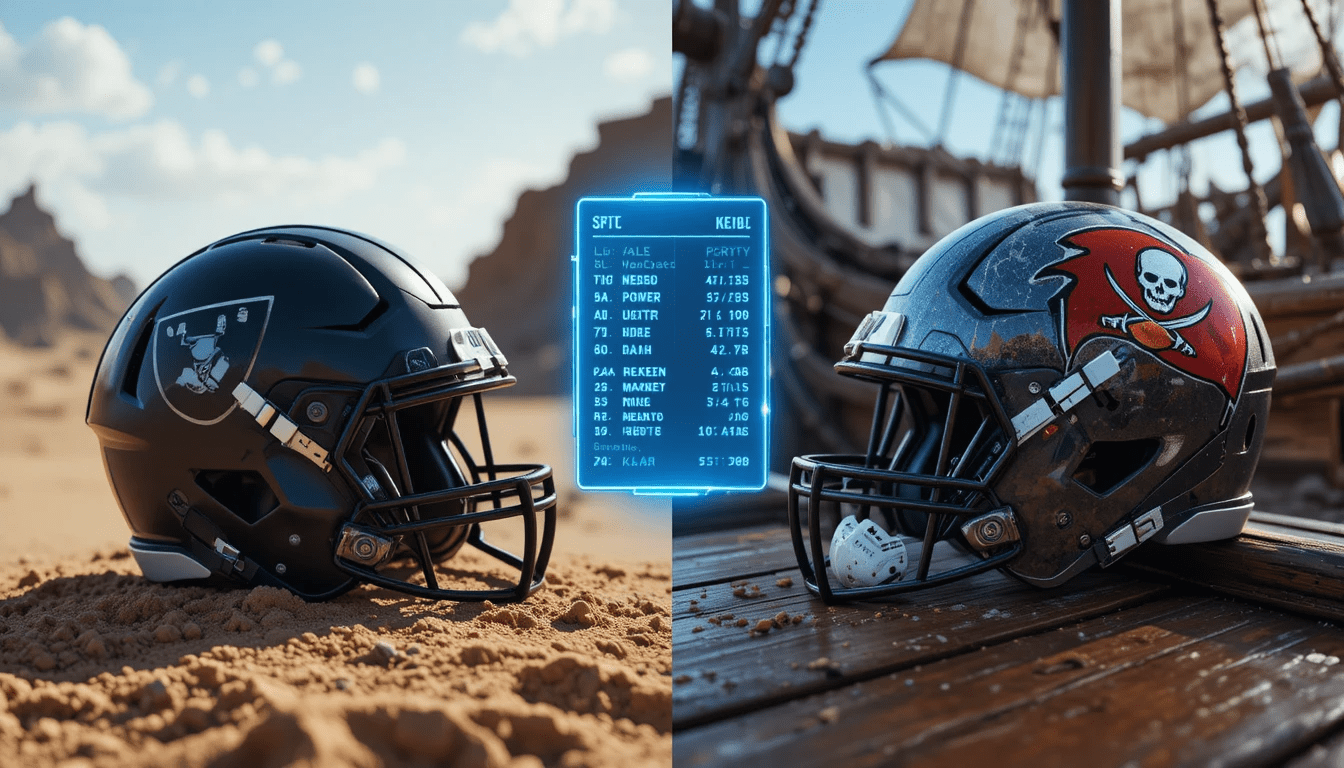
There are certain NFL matchups that just feel different. You know the ones. It’s not just about the game on the schedule; it’s about the history, the contrasting styles, the weird energy in the air. When the Las Vegas Raiders and the Tampa Bay Buccaneers collide, my mind instantly drifts back to Super Bowl XXXVII. The “Gruden Bowl.” It was a massacre, sure, but it set the tone for a rivalry that, while infrequent, always carries a little extra weight.
But we aren’t here for a history lesson. We’re here because you want to know what happens when these two teams meet now. You’re looking for the Las Vegas Raiders vs Tampa Bay Buccaneers match player stats—the numbers that decide fantasy matchups, settle bar bets, and explain why your team won (or lost).
The thing about football stats is that they can be incredibly misleading. A quarterback can throw for 400 yards and still have a terrible game. A running back can average 2.5 yards a carry but be the MVP because he converted every single third-and-short. Let’s peel back the layers and look at what really matters when the Silver and Black face the Pewter Pirates.
The Quarterback Equation: Efficiency vs. Aggression
When you look at the box score for a Raiders-Bucs game, the first place your eyes go is the QB line. It’s natural. But don’t just look at total yards.
In recent matchups, the story has often been about efficiency versus aggression. The Buccaneers, usually blessed with a high-flying receiving corps (think Mike Evans or Chris Godwin), tend to have quarterbacks who push the ball downfield. You’ll see high “Air Yards per Attempt” stats. This means they aren’t dinking and dunking; they are taking shots. If the Bucs’ QB has 300 yards but a completion percentage under 60%, it tells you the Raiders’ secondary was bending but maybe not breaking until the big play hit.
On the other side, the Raiders often play a different game. Whether it’s Derek Carr in the past or whoever is currently under center in Vegas, their stats often reflect a need to get the ball out fast. Look for Time to Throw. If the Raiders’ QB is getting the ball out in under 2.5 seconds on average, it means they respect (or fear) the Bucs’ pass rush. If that number creeps up to 3 seconds, that’s usually when the sack numbers start climbing.
The Trenches: Where the Game is Actually Won
I always tell my friends who are new to football: watch the big guys. Seriously. The stats for offensive and defensive linemen aren’t as sexy as touchdowns, but they tell the real story.
When Tampa Bay plays Las Vegas, the battle to watch is usually the Bucs’ interior defensive line against the Raiders’ interior offensive line. Why? Because the Bucs have historically had monsters in the middle—guys like Vita Vea.
Here are the stats to hunt for:
- Run Stop Win Rate: This measures how often a defender beats his blocker to stop a run. If the Bucs’ interior defenders have a high win rate, you’ll see the Raiders’ running back stats suffer. You’ll see a lot of “20 carries for 65 yards” kind of lines.
- Pressure Rate: Not just sacks. Pressures. If the Raiders’ defensive ends (like the relentless Maxx Crosby) are generating a high pressure rate, the Bucs’ offensive rhythm falls apart. Even if they don’t get the sack, a pressure forces a bad throw. It’s the invisible stat that changes everything.
You can find some incredible deep-dive analytics on line play at sites like Pro Football Focus if you really want to geek out on the grades.
The Skill Positions: Davante Adams and Mike Evans
Let’s talk about the stars. In a theoretical or recent matchup involving these franchises, you’re almost always looking at elite wide receiver play.
Take a guy like Davante Adams for the Raiders. His stats are a masterclass in volume. When you check the Target Share (the percentage of team throws that go to one player), Adams is usually hovering around 30% or more. That is absurd. It means the offense runs through him. If the Bucs’ defense manages to hold him to under 70 yards, check the safety help. It usually means they double-teamed him all night, which should theoretically open up stats for the tight ends or slot receivers.
Then look at Mike Evans for the Bucs. His key stat isn’t always yards; it’s Red Zone Targets. The man is a walking touchdown waiting to happen. In a Raiders vs. Bucs game, if Tampa gets inside the 20-yard line, the probability of an Evans target skyrockets. He boxes out defenders like a basketball player.
The “Hidden” Player Stat: The Slot Corner
This is a niche one, but stick with me. Both teams love to utilize the middle of the field. The Raiders love their tight ends; the Bucs love their slot receivers.
This puts immense pressure on the “Nickel” corner—the defensive back who covers the slot. If you look at the tackle stats and see a cornerback leading the team in tackles, that’s usually a bad sign for the defense. It means the offense is completing passes in front of him over and over again. If the Raiders’ slot corner has 12 tackles, it probably means the Bucs were feasting on short, easy throws all game long.
Special Teams: The Silent Killer
Nobody checks the punter’s stats until it’s too late. But in a game that could be a defensive struggle, Net Punting Average is huge.
Las Vegas has a history of strong special teams play (shoutout to AJ Cole). If the Raiders are averaging 45+ net yards per punt, they are flipping the field. They are making the Bucs’ offense drive 80 yards instead of 50. Over the course of four quarters, that exhaustion adds up. It doesn’t show up in the fantasy points, but it shows up on the scoreboard.
The Mental Game: Penalties
The Raiders have a reputation. Sometimes it’s earned, sometimes it’s just bias, but the “Penalty Yards” stat is crucial here.
If Las Vegas racks up 80+ yards in penalties, they are essentially handing the Buccaneers a free touchdown drive. Conversely, a disciplined game from the Raiders puts massive pressure on Tampa. When analyzing the match stats, look at Third Down Penalties. These are backbreakers. Extending a drive because of a defensive holding call is statistically more damaging than giving up a 15-yard run.
For a broader look at how these historical trends play out over seasons, general sports databases like Pro-Football-Reference are fantastic for context.
FAQs
Q: Who usually wins the possession battle in this matchup?
A: Historically, it depends on the run game. If the Raiders can establish the run (Josh Jacobs in the past, or the current committee), they tend to dominate Time of Possession. The Bucs often play faster, striking quickly with big passes, which leads to lower possession times even in wins.
Q: Which defensive player stat is most important?
A: Tackles for Loss (TFL). In this specific matchup, whichever team gets the offense “behind the sticks” (like 2nd and 12) usually wins. Look for linebackers shooting gaps.
Q: Do these teams play often?
A: No. Because they are in different conferences (AFC vs. NFC), they only play each other once every four years in the regular season, unless they meet in the Super Bowl (again!). This makes every matchup rare and the data more volatile.
Q: Where can I find live player stats during the game?
A: Most sports apps (ESPN, Sleeper, Yahoo) are great, but the official NFL app usually provides the “Next Gen Stats” which show player speed and separation, which is super cool to watch in real-time.
The Final Whistle
So, the next time you see the Las Vegas Raiders vs Tampa Bay Buccaneers match player stats pop up on your screen, don’t just glaze over the numbers.
Look for the pressure rates. Check the red zone targets. See who is winning the battle in the slot. The box score is just a black and white summary of a very colorful, violent chess match. Understanding these nuances doesn’t just make you a better fan; it makes the game a hell of a lot more interesting to watch. Enjoy the game!
