

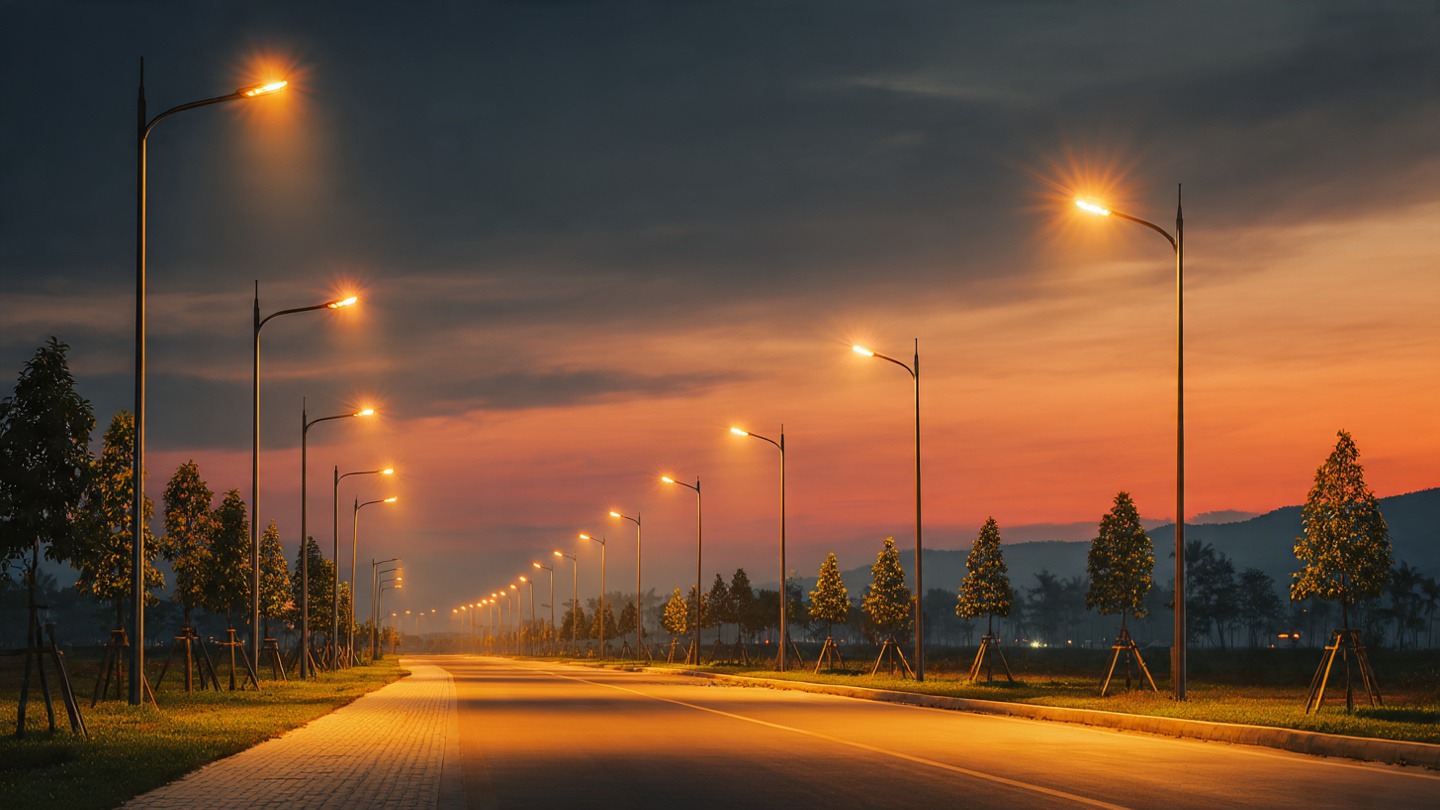
At first, it sounds like two completely different worlds stitched together.
Oil palm.
Streetlights.
One belongs to plantations stretching across tropical landscapes. The other glows above urban roads after sunset. So when people hear about an oil palm project involving streetlights, they pause.
What’s the connection?
The answer is smarter and more hopeful than it seems.
From Plantation Waste to Power on the Streets
Oil palm cultivation is massive. Indonesia and Malaysia alone account for roughly 85% of global palm oil production, and worldwide output surpassed 77 million metric tons in recent years. That’s a staggering amount.
But here’s the part most people don’t think about: palm oil production creates significant biomass waste.
- Empty fruit bunches
- Palm kernel shells
- Palm oil mill effluent (POME)
For decades, much of this was underused. Some was burned inefficiently. Some decomposed and released methane.
Now? It’s being turned into energy.
Several pilot programs have explored converting palm biomass into biogas or biofuel that powers rural infrastructure — including streetlights. Organizations like the Food and Agriculture Organization of the United Nations have documented how agricultural waste can be transformed into renewable energy in developing regions.
That’s where the oil palm project involving streetlights begins to make sense.
Why Streetlights Matter in Rural Palm Regions
Many oil palm plantations are located in rural areas where electricity access can be unreliable.
Picture a small village near a plantation. After sunset, roads go dark. Transportation becomes risky. Businesses close early. Safety drops.
Now imagine those same roads lit using energy generated from the palm waste produced locally.
It creates a circular system:
Palm trees → oil production → biomass waste → bioenergy → streetlights → safer community.
That’s not just sustainability. That’s local resilience.
The Technology Behind It (Without the Jargon)
Here’s the simple version.
Palm oil processing produces organic waste. That waste can be fed into biodigesters. Biodigesters break it down and produce biogas mainly methane. That gas fuels generators. Generators produce electricity.
Electricity powers:
- Streetlights
- Community centers
- Local schools
- Even small health clinics
In some regions, solar-hybrid systems are combined with palm biomass generators to ensure consistent output during cloudy seasons.
It’s practical. It’s scalable. And importantly, it reduces methane emissions a greenhouse gas significantly more potent than CO₂ over a 20-year period.
Real-World Implementation Examples
In parts of Southeast Asia, small-to-mid-scale palm mills have begun integrating waste-to-energy systems. Government sustainability roadmaps and renewable energy incentives have accelerated this shift.
For example, Indonesia’s renewable energy transition strategy highlights biomass and biogas as key contributors to rural electrification efforts. According to reports from the International Renewable Energy Agency (IRENA), bioenergy could supply up to 17% of global renewable energy needs by 2030 if infrastructure investment continues.
That’s not theoretical.
It’s already happening in pilot districts where palm mill byproducts are directly tied to community infrastructure including LED streetlight networks.
The Environmental Debate (Because It Exists)
Let’s be honest.
Oil palm itself is controversial.
Deforestation, habitat loss, and biodiversity threats are serious concerns. Orangutan populations, for example, have declined sharply in areas linked to unsustainable palm expansion.
So when someone hears “oil palm project,” skepticism is fair.
But projects involving streetlights often focus on waste optimization, not expansion. They don’t require new plantations. They repurpose existing byproducts.
It shifts the conversation from extraction to efficiency.
And that nuance matters.
A Story From the Field
A sustainability consultant once described visiting a palm-processing village where generators powered by palm kernel shells ran only during milling hours. After adjustments, excess stored energy was redirected to LED streetlights along a nearby road.
The first night those lights switched on, residents gathered outside.
Children played longer. Motorcyclists felt safer. Small shops stayed open an extra hour.
It wasn’t just infrastructure.
It was transformation.
Small. But visible.
Why This Model Could Expand Globally
Palm oil isn’t limited to Southeast Asia. It’s grown in parts of Africa and Latin America too.
In regions where grid access is limited, localized bioenergy systems can reduce dependence on diesel generators which are expensive and carbon-intensive.
With energy prices fluctuating globally, decentralized renewable systems are becoming attractive even beyond environmental reasons. They offer:
- Cost stability
- Energy independence
- Lower long-term infrastructure strain
If structured correctly, oil palm projects involving streetlights could serve as case studies for agricultural circular economies.
Unique Data Insight: Waste-to-Energy Growth
Recent renewable market projections indicate that global bioenergy capacity is expected to grow steadily through 2030, especially in agricultural economies. Investment in waste-to-energy systems increased notably in emerging markets over the past five years, driven by climate commitments and rural development funding.
Streetlight integration is often one of the first visible applications because:
- It requires moderate, predictable power loads.
- It demonstrates impact quickly.
- It directly benefits public safety.
Visibility builds public trust.
And public trust supports scaling.
Challenges That Still Need Solving
Of course, it’s not perfect.
- Initial biodigester installation costs can be high.
- Maintenance requires technical training.
- Poorly managed systems risk leakage or inefficiency.
There’s also the bigger question of ensuring palm oil production itself becomes more sustainable through certification systems and deforestation controls.
Waste-to-energy projects should complement broader reform not distract from it.
What the Future Could Look Like
Imagine a plantation region where:
- Processing waste fuels streetlights.
- Excess energy powers cold storage for crops.
- Local entrepreneurs operate maintenance services.
- Emissions drop because methane is captured instead of released.
That’s not fantasy.
It’s systems thinking.
Agriculture and infrastructure don’t have to operate separately.
When they connect intelligently, communities benefit.
FAQs About Oil Palm Projects Involving Streetlights
What is an oil palm project involving streetlights?
It refers to initiatives that convert palm oil processing waste into bioenergy used to power streetlights, especially in rural areas.
Is this environmentally friendly?
When focused on waste utilization and methane capture, it reduces greenhouse gas emissions. However, sustainability depends on responsible palm cultivation practices.
Where are these projects being implemented?
Primarily in Southeast Asia, with growing interest in parts of Africa and Latin America.
How does palm waste become electricity?
Through biodigesters that convert organic waste into biogas, which fuels generators producing electricity.
Can this replace traditional grid power?
In rural areas, it can supplement or partially replace grid systems, particularly for low-load infrastructure like street lighting.
Final Thoughts
An oil palm project involving streetlights might sound unusual at first.
But when you look closer, it represents something bigger.
Waste becoming power.
Plantations supporting villages.
Light where there was darkness.
It doesn’t solve every issue tied to palm oil.
But it shows what’s possible when industries rethink their leftovers.
Sometimes sustainability isn’t about inventing something new.
It’s about using what we already have better.
